
The Untold Reality Behind “Mr. Surrender”: Courage, Controversy & Change

Who Is “Mr. Surrender”?

At the heart of the video lies a controversial figure known as “Mr. Surrender.” This title seems to carry more than just a literal meaning—it is symbolic. The individual is criticized, maybe even shamed, for stepping back, giving in, or yielding—in situations where strength, resistance, or endurance are often socially rewarded.

“Mr. Surrender” might be someone who chose peace over conflict, silence over shouting, safety over risk. The video doesn’t paint this person as simply wrong; instead, it raises questions: is surrender always weakness? Is resistance always virtuous?


Social Pressure, Identity, and Expectations

One of the core tensions the video illuminates is between how society expects people to behave and what individuals feel they must do. Across cultural, regional, and generational lines, there is often a powerful narrative: strength is expressed by persistence, by fighting on, even when the odds are stacked. To surrender—to admit defeat, to walk away, or to step back—can be viewed as failing.

This video challenges that notion. It prompts us to consider:

  • The emotional toll of constant resistance.

  • The courage it takes to surrender—for one’s mental health, values, or relationships.

  • The price of not surrendering in certain situations—burnout, loss, conflict.


Conflicts: Not Always Physical

Often we think of surrender as a physical act: stopping a fight, conceding in a war, giving up ground. But many surrenders are internal—choosing to stop arguing, letting go of anger, accepting what can’t be changed, or admitting when continuing causes more harm than good.

“Mr. Surrender” could be someone who walked away from toxic relationships, or someone who accepted his limitations with grace. But these internal decisions are rarely celebrated. The video brings focus to how hard and lonely those choices can be.


Redemption vs. Judgement

Another theme is how society treats someone who “surrenders.” Do we see them as weak, or do we see them as human? Do we respect that they made a different choice when none of the obvious options felt right?

The video seems to encourage empathy. It suggests that surrender does not erase dignity. That admitting a truth—“I cannot do this anymore,” or “This path is destroying me”—can itself be a powerful moment of self-knowledge and authenticity.

There is redemption in that. And redemption, the video implies, is different from victory. Surrender might not come with applause, but it can bring peace.


Redemption in the Broader Community

What happens when society acknowledges someone’s surrender? What if having space to walk away from conflict, bitterness, or even from social expectations becomes normalized and accepted?

Possible ripple effects:

  • More honest conversations about mental health.

  • Reduced stigma around admitting one’s limits.

  • Recognizing that self-care and emotional boundaries aren’t concessions but essential parts of well-being.


Change is Also in Perspective

Nitish Rajput’s video pushes us to redefine our ideas of strength. We often celebrate outward success, visible victories, loud resistance. What if we also valued:

  • Quiet resilience

  • Grace in accepting reality

  • Choosing peace over perpetual battle

It’s a shift in perspective—one that’s uncomfortable but necessary.


What We Can Learn

Here are some takeaways the video inspires:

  1. Surrender is not synonymous with failure. Frequently, it’s about choosing the right battle—or choosing sanity over strife.

  2. Courage takes many forms. Not all bravery is loud. Some of it is internal, private.

  3. Judgment often overlooks context. We don’t always see what led someone to surrender. Trauma, fatigue, loss—they shape decisions.

  4. Empathy matters. Offering understanding rather than condemnation can help people heal and grow.

  5. Society’s values evolve. What was once seen as cowardice might one day be understood as wisdom.


Conclusion

“Mr. Surrender” isn’t a figure to be laughed at, dismissed, or derided—it’s a mirror. A mirror showing how we define strength, how we expect people to behave, and how often we miss the unseen battles.

Ultimately, the video asks us to reexamine our assumptions. It urges us to see surrender not as a final defeat, but as a human choice—one that can bring dignity, relief, perhaps even peace. What does your judgment of “surrender” say about your own story?
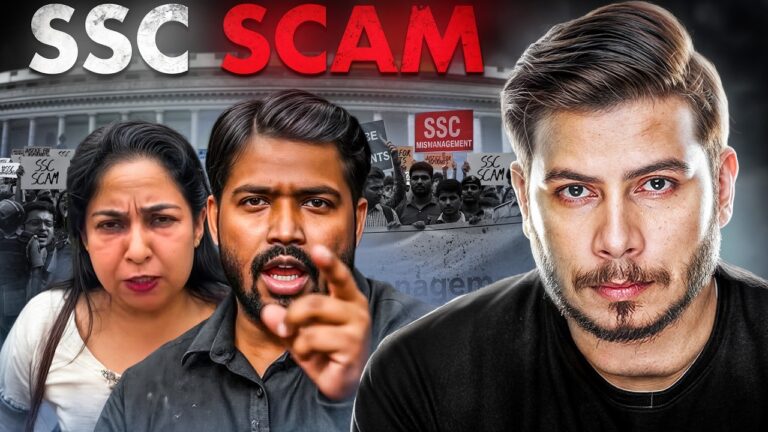

Reality Of SSC Exams: What’s Behind the Headlines

The video “Reality Of SSC Exams” by Nitish Rajput throws light on the complex dynamics and controversies around SSC (Staff Selection Commission) exams in India. It digs into issues like vendor contracts, fairness, policy changes and how these affect students preparing for SSC exams. This post breaks down the video’s points, adds context, and suggests what could be done for a more equitable exam system.


What Are SSC Exams & Why They Matter

SSC (Staff Selection Commission) exams are national-level competitive exams in India for recruiting staff in ministries, departments, and various governmental agencies. Because they offer thousands of government job opportunities and are considered stable, fair, and prestigious, SSC exams are highly competitive. They are an important avenue for many students seeking secure employment.


Key Issues Highlighted in the Video

  1. Vendor Changes
    The video discusses how responsibility for administering exam services (printing question papers, conducting exams, evaluating, etc.) has shifted among different vendors over time — from Sify to TCS, then to Eduquity. (YouTube)

    Each shift has come with issues: delays, logistical mistakes, or concerns over integrity. When vendors change, transition periods can lead to confusion and error.

  2. Tender Rules & Transparency
    One significant concern is how SSC awards contracts to vendors. Tendering rules are supposed to ensure transparency and fairness—but the video suggests there have been lapses. (YouTube)

    Questions hover over whether vendor selection is fully transparent, whether costs and quality are adequately evaluated, and whether the rules protect candidates’ interest.

  3. Impact on Candidates
    Errors, delays, or lack of clarity have a direct impact on students—lost preparation time, emotional stress, confusion about exam schedules, sometimes even questions over the legitimacy of exam processes. Many students invest years preparing, and small lapses can significantly affect their performance and prospects.

  4. Systemic Weaknesses
    According to the video, beyond vendor issues, the SSC system shows broader weaknesses: gaps in accountability, potential for mismanagement, sometimes poor implementation, and the struggle of keeping up with large scale logistical demands. (YouTube)


Broader Context: Why These Issues Persist

To understand why these problems persist, it helps to look at systemic factors:

  • Scale & Competition: SSC exams serve huge numbers of candidates across India. Ensuring fairness and smooth operations at that scale is non-trivial.

  • Legacy Systems & Bureaucracy: Many administrative practices are inherited from older systems; change can be slow.

  • Stakeholder Pressure: Vendors, politicians, exam candidates—all have stakes. Sometimes meeting all demands without compromise is difficult.

  • Technology, Implementation & Oversight: Even when modern tech is used, implementation (on-ground execution) and oversight (monitoring, redressal) can lag behind.


What Can Be Done: Improvements & Reforms

To strengthen the integrity, fairness, and efficiency of SSC exams, here are some possible reforms:

  • Greater Transparency in Vendor Selection
    Ensure that tender processes are public, criteria well-defined, and all bidders evaluated fairly. Publish vendor performance metrics.

  • Regular Audits & Independent Oversight
    Independent third-party audits of exam processes can help find gaps. Oversight by civil society / student bodies might help too.

  • Better Logistical Planning
    When changing vendors or implementing new systems, pilot testing, phased rollouts, buffer times, clear communication to students can avoid disruptions.

  • Affordability & Access
    Making exam preparation materials, official mock tests, and guidance accessible publicly helps level the playing field for students from less privileged backgrounds.

  • Stronger Redressal Mechanisms
    When issues arise (errors, delays, leaks, etc.), there should be clear, timely mechanisms for students to file complaints and get fast resolutions.


Conclusion

The SSC exams are more than just tests: they are pathways to economic security, stability, and social mobility for millions of students. The video “Reality Of SSC Exams” shines an important spotlight on how administrative hurdles, vendor dynamics, and gaps in transparency can erode faith in the system. While the challenges are real, they are not insurmountable.

Addressing them requires a combination of policy reform, better implementation, and stronger accountability. For candidates, staying informed and raising voices where needed (through societies, social media, or legal avenues) can help push for changes. For institutions, keeping the welfare of students at the center must be a priority.

The Koh-i-Noor Diamond – A Tale of Brilliance, Power, and Curse

Few objects in history command as much allure and controversy as the Koh-i-Noor Diamond—the “Mountain of Light.” Acclaimed for its unparalleled brilliance and notorious for an ominous legend, this gem’s journey spans centuries across empires, conquests, and moral debates. Let’s unpack its story—fact and folklore alike.


Origins & Enigmatic Beginnings

Mining origins trace back to the rich Golconda mines (modern-day Andhra Pradesh), famed for producing some of the world’s most extraordinary diamonds Wikipedia+1. Its earliest recorded mention appears around the 14th century, under the ownership of the Kakatiya dynasty. Noted for its immense size, it may weigh up to 186 carats in early records Guardians Of The LegendsWikipedia.

When Babur, founder of the Mughal Empire, acquired Delhi and Agra in 1526, the diamond allegedly came into his possession as tribute Wikipedia. Later, Shah Jahan famously embedded it within the luxurious Peacock Throne, symbolizing imperial grandeur Diamond BuzzWikipedia.


Conquests, Custodies & Controversies

In 1739, Nader Shah of Persia invaded Delhi, looted the treasury, and gazed upon the stone in awe—declaring “Koh-i-Noor” upon it WikipediaDiamond Buzz. Following his assassination, the gem passed to the Durrani rulers of Afghanistan, and under Shah Shuja, was eventually transferred to Ranjit Singh, the Sikh emperor, in 1813 Wikipedia+1.

Despite its prestige, tragedy seemed to trail each possessor. After the death of Ranjit Singh and turbulent politics, the British East India Company annexed Punjab in 1849 and forced ten-year-old Maharaja Duleep Singh to surrender the diamond under the Treaty of Lahore Vaseem KhanWikipedia.


The Curse & Royal Precautions

Legend proclaims:

“He who possesses this diamond will own the world, but suffer all its misfortunes. Only God—or a woman—can wear it without harm.” vulcans-forge.comGuardians Of The Legends

From Alauddin Khalji’s assassination to Nader Shah’s murder, misfortune seemed to follow each male holder Wikipedia. In the British monarchy—aware of the myth—the Koh-i-Noor was eventually confined to queen consorts only, worn by Queen Victoria’s successors: Queen Alexandra, Queen Mary, and Queen Elizabeth The Queen Mother Vaseem Khanvulcans-forge.com.


Colonial Legacy & Ethical Debate

Displayed at the 1851 Great Exhibition, the Koh-i-Noor initially disappointed many who likened it to ordinary glass. In response, Prince Albert had it recut, reducing its size but enhancing its fire Diamond BuzzWikipedia.

Today, it remains embedded in the British Crown Jewels, kept at the Tower of London Diamond BuzzVaseem Khan. Its origin and ownership have become flashpoints across countries such as India, Pakistan, Iran, and Afghanistan, each demanding its return Vaseem Khanpret-a-reporter.co.uk.


Fact or Folklore?

While tales of a curse continue to fascinate, historians caution against literal interpretations. As noted by analysts, misfortunes surrounding the Koh-i-Noor are more plausibly tied to political upheaval than supernatural forces Medium.


Summary Table

Aspect

Insight

Origin

Discovered in Golconda; passed through Mughal, Persian, Afghan, Sikh hands

Legendary Curse

Myth warns only divine or women can wear it without misfortune

Royal Usage

Restricted to queens in the British monarchy

Contemporary Debate

Calls for repatriation by multiple nations continue today


The journey of the Koh-i-Noor is far more than a gemstone’s odyssey—it’s a prism through which we view ambition, empire, and legacy. Its brilliance dazzles, but its history reflects deeper truths about power, mythology, and cultural heritage.

Understanding Naxalism in India — Origins, Impact, and Solutions

Video courtesy of Nitish Rajput, Naxalism has long challenged India’s pursuit of social equity and governance. Emerging more than five decades ago in the remote village of Naxalbari, it’s a movement rooted in agrarian discontent, socioeconomic injustice, and left-wing extremism.