How Kashmir Became Part of India — A Clear, Neutral Account

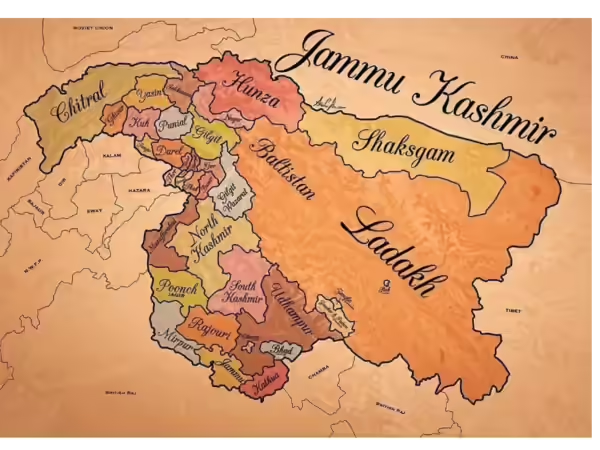
When British India was partitioned in 1947, princely states were given the option to join India or Pakistan or remain independent. Jammu & Kashmir initially chose a neutral, independent course. Yet within weeks, the region became part of India. What happened between those decisions and Kashmir’s accession remains a contested and emotional chapter in South Asian history.

Preeclampsia: A Silent Threat to Pregnant Women and Their Babies

Preeclampsia is a serious pregnancy-related condition that can endanger the lives of both mother and baby if not detected and managed properly. Despite advances in medical science, the exact cause of preeclampsia remains unclear, and there is still no guaranteed way to prevent it completely.

How Pakistan’s Plan to Capture Kashmir Collapsed: What Really Happened After Partition

More than seven decades after independence, the Kashmir dispute between India and Pakistan remains one of the most complex and enduring conflicts in South Asia. To understand its roots, we must revisit the turbulent months following 1947 — when tribal invaders from Pakistan, aided by elements within the Pakistani army, launched an incursion into Kashmir, and the Indian Army flew in to defend Srinagar. This article presents a detailed account of those dramatic days and how the course of history changed forever.

How a Toxic Land in Nagpur Transformed into a Dense Bamboo Forest

When we think of barren, toxic land covered in layers of poisonous ash, it is difficult to imagine it becoming green again. Yet, in Nagpur, Maharashtra, what was once a lifeless wasteland filled with fly ash has been reborn as a thriving bamboo forest. Thanks to the dedicated efforts of scientists from NEERI (National Environmental Engineering Research Institute), led by Dr. Lal Singh and his team, along with local women’s groups and students, more than 230 acres of ash-covered land has turned into lush greenery.